
Storm Damage Restoration in Sioux Falls
Storm damage restoration in Sioux Falls and surrounding areas. Insurance billing accepted. Call (605) 965-2727.
A storm rolls through Sioux Falls on a Tuesday night, and by Wednesday morning you’re standing in your living room staring at a ceiling that’s bowed from water, a wall punched through by a fallen oak limb, or shingles scattered across your lawn. The damage is visible, but the part that causes the most long-term harm, water that’s already migrating into wall cavities, insulation that’s soaking up moisture behind intact drywall, structural members exposed to the elements, is the part you can’t see yet. Storm damage restoration is the work of stopping that hidden clock before it compounds into a mold problem, a structural problem, or a denied insurance claim.
What Storm Damage Restoration actually involves
Storm damage rarely arrives as one clean problem. A single severe weather event can combine wind damage, impact damage from debris or hail, water intrusion through a compromised roof or broken windows, and secondary flooding from overwhelmed gutters or storm drains. Each of those damage types follows its own timeline and requires different equipment and techniques.
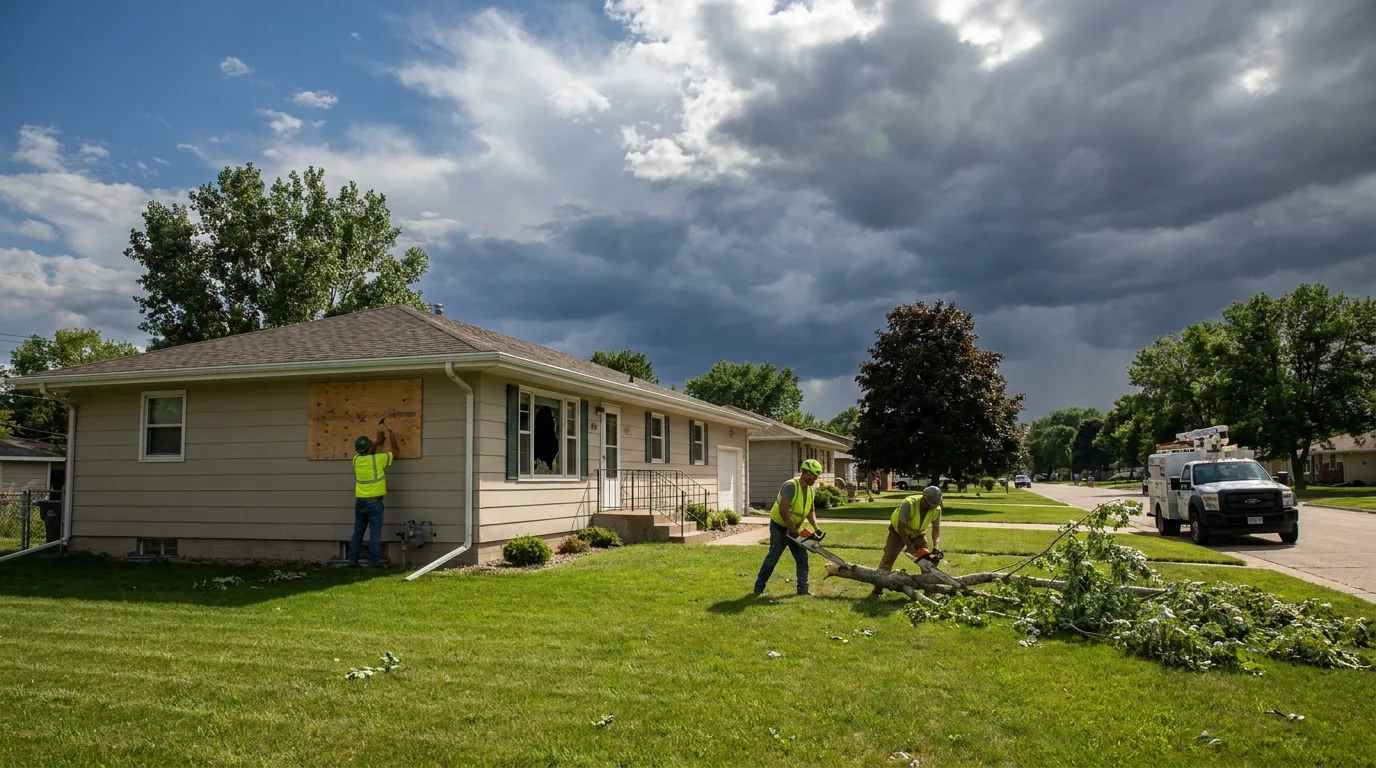
On the exterior, crews assess structural integrity before anything else, a partially collapsed roof or a load-bearing wall compromised by a fallen tree has to be stabilized before interior work begins. Temporary protective measures go up fast: roof tarps secured with weighted lumber rather than just staples, plywood boarding over broken windows and doors, and perimeter containment if there’s active debris hazard. These aren’t cosmetic steps; they’re what stop a $15,000 loss from becoming a $60,000 loss over the next 48 hours of rain.
Inside, the focus shifts to moisture. Even if the water intrusion looks minor, storm-driven rain can push several gallons per hour through a compromised roof assembly. Thermal imaging cameras reveal moisture behind drywall that looks dry to the eye. Industrial air movers and dehumidifiers begin structural drying, and moisture readings are logged at multiple points daily so there’s a documented drying record, something insurance adjusters specifically look for when evaluating a claim.
Tree damage cleanup, hail damage to siding and mechanical systems, and tornado damage cleanup each add layers of scope: debris removal, documentation of impact patterns, and coordination with roofing and reconstruction crews for permanent repairs.
Our process
-
Emergency stabilization and exterior protection. Before any interior work, the structure is made weather-tight. Roof tarps, board-up, and temporary shoring happen within the first hours on site. This step directly limits the scope of the claim and prevents secondary damage that insurers may not cover.
-
Full-structure damage documentation. Every affected surface is photographed and measured. Moisture readings are taken at regular grid intervals across ceilings, walls, and floors. Hail impact patterns, wind-driven debris paths, and structural deformation are documented in writing, this becomes the backbone of the insurance claim package.
-
Debris removal and interior extraction. Fallen limbs, displaced roofing materials, broken glass, and storm-driven water are removed. If standing water is present, truck-mounted extraction equipment pulls it before drying equipment is staged. Saturated insulation is removed and bagged, it cannot be dried in place and will harbor mold if left.
-
Structural drying and monitoring. Air movers and commercial-grade desiccant or refrigerant dehumidifiers run continuously. Moisture readings are logged at every visit, typically daily, until all structural materials reach target drywall moisture content. The drying log is provided to the insurance carrier as part of the claim file.
-
Scope-of-work handoff to reconstruction. Once the structure is dry and stabilized, a written reconstruction scope is produced: framing repairs, roofing, siding, drywall, and finishes. This document goes to the insurance adjuster and serves as the basis for the repair estimate, so there are no surprise line items later.
What separates a good storm damage response from a bad one
The most common mistake after severe weather damage is treating the visible damage as the whole problem. A crew that tarps the roof, pulls the wet carpet, and calls it done has likely left moisture in the wall assembly, attic insulation, or subfloor, material that will grow mold within 24 to 72 hours under the right conditions.
Insurance adjusters are trained to look for a documented drying log. If a contractor dried the structure but has no moisture readings to show for it, the carrier may dispute whether drying was necessary or complete. That gap can shift costs back to the homeowner.
Another common failure point is incomplete debris documentation after tornado damage cleanup or tree damage cleanup. The impact pattern of a fallen tree tells a structural story, which members took the load, whether the foundation was affected, whether adjacent framing was racked. A contractor who removes the tree without documenting the impact zone first loses evidence that supports a fuller claim.
Hail damage is frequently underscoped on mechanical systems. HVAC condenser fins, exhaust vents, and gutters are damaged by the same storm that hit the roof, but they’re easy to miss in a visual walkthrough. A thorough storm cleanup services assessment includes those systems.
What does Storm Damage Restoration cost?
Typical costs for storm damage restoration vary significantly based on the type of storm, the size of the affected area, and how quickly the structure was protected after the event. Most homeowners pay somewhere between $2,500 and $25,000 for combined mitigation and initial repairs, though large-loss events, a tornado that removes a significant portion of a roof, or a tree that collapses into occupied living space, can run considerably higher. The table below reflects typical industry ranges by scenario.
| Scenario | Typical range |
|---|---|
| Roof tarp and board-up only (emergency stabilization) | $500 – $1,800 |
| Wind damage with minor water intrusion, single room | $2,500 – $6,000 |
| Tree impact with structural damage, partial roof loss | $8,000 – $22,000 |
| Hail damage to roof, siding, and mechanicals | $6,000 – $18,000 |
| Tornado damage with significant structural compromise | $20,000 – $80,000+ |
| Full interior water mitigation after roof failure | $4,000 – $14,000 |
Every loss is different, these are industry-typical figures, not quotes. Crew Restoration & Construction provides a written scope of work before any billable work begins, so you know exactly what’s covered and why. Homeowners insurance typically covers sudden storm damage to the structure and its systems, including emergency stabilization costs; coverage for contents, detached structures, and landscaping varies by policy.
Seasonal and regional considerations
Sioux Falls and the surrounding eastern South Dakota region sit in a zone where severe weather patterns shift dramatically by season. Late spring through early fall brings the highest concentration of tornado and severe thunderstorm activity, the same system that spawns hail in Harrisburg can produce straight-line winds in Brandon twenty minutes later. Rapid response matters most in this window because warm, humid post-storm air accelerates mold colonization in wet building materials.
Winter storms introduce a different set of problems: ice dams along roof eaves force water backward under shingles, and the freeze-thaw cycles that characterize South Dakota springs can reopen gaps in flashing and siding that seemed minor after the initial event. Storm damage that goes unaddressed through a Sioux Falls winter often presents as a much larger water intrusion problem by April.
Service area
Crew Restoration & Construction provides storm damage restoration throughout Sioux Falls and the surrounding region, including Harrisburg, Brandon, Tea, Renner, Crooks, Dell Rapids, and Hartford. Dedicated service-area pages for each community link back here for full service details.
If a storm has left your home or property exposed, the window to limit secondary damage is short. Call Crew Restoration & Construction at (605) 965-2727 to schedule your storm damage assessment and get a written scope before any work begins.
Frequently Asked Questions
Does homeowners insurance cover storm damage restoration?
How do I know if there's hidden water damage after a storm, even if my ceiling looks dry?
What documentation should I gather before the restoration crew arrives?
Can a fallen tree cause structural damage that isn't obvious right away?
What's the difference between storm damage restoration and just hiring a roofing contractor?
Looking for the best storm damage restoration company in Sioux Falls?
Crew Restoration & Construction provides licensed and insured storm damage restoration in Sioux Falls, SD and the surrounding area. Customers rate us 4.9 out of 5 stars across 564 Google reviews. We answer calls 24/7 — call (605) 965-2727 for immediate help.
Request a Free Storm Damage Restoration Estimate
Tell us what happened and we'll get back to you fast — usually within one business hour.
Need Storm Damage Restoration now?
We respond 24/7 across Sioux Falls and surrounding SD cities.
Related Coverage
- Our Restoration Services
- Contact Crew Restoration & Construction
- Storm Damage Restoration in Brandon
- Storm Damage Restoration in Brookings
- Storm Damage Restoration in Canton
- Storm Damage Restoration in Dell Rapids
- Storm Damage Restoration in Flandreau
- Storm Damage Restoration in Harrisburg
- Storm Damage Restoration in Hartford
- Storm Damage Restoration in Le Mars
- Storm Damage Restoration in Lennox
- Storm Damage Restoration in Luverne
- Storm Damage Restoration in Madison
- Storm Damage Restoration in North Sioux City
- Storm Damage Insurance Claim Checklist (Use This Before You Call Your Insurer)