
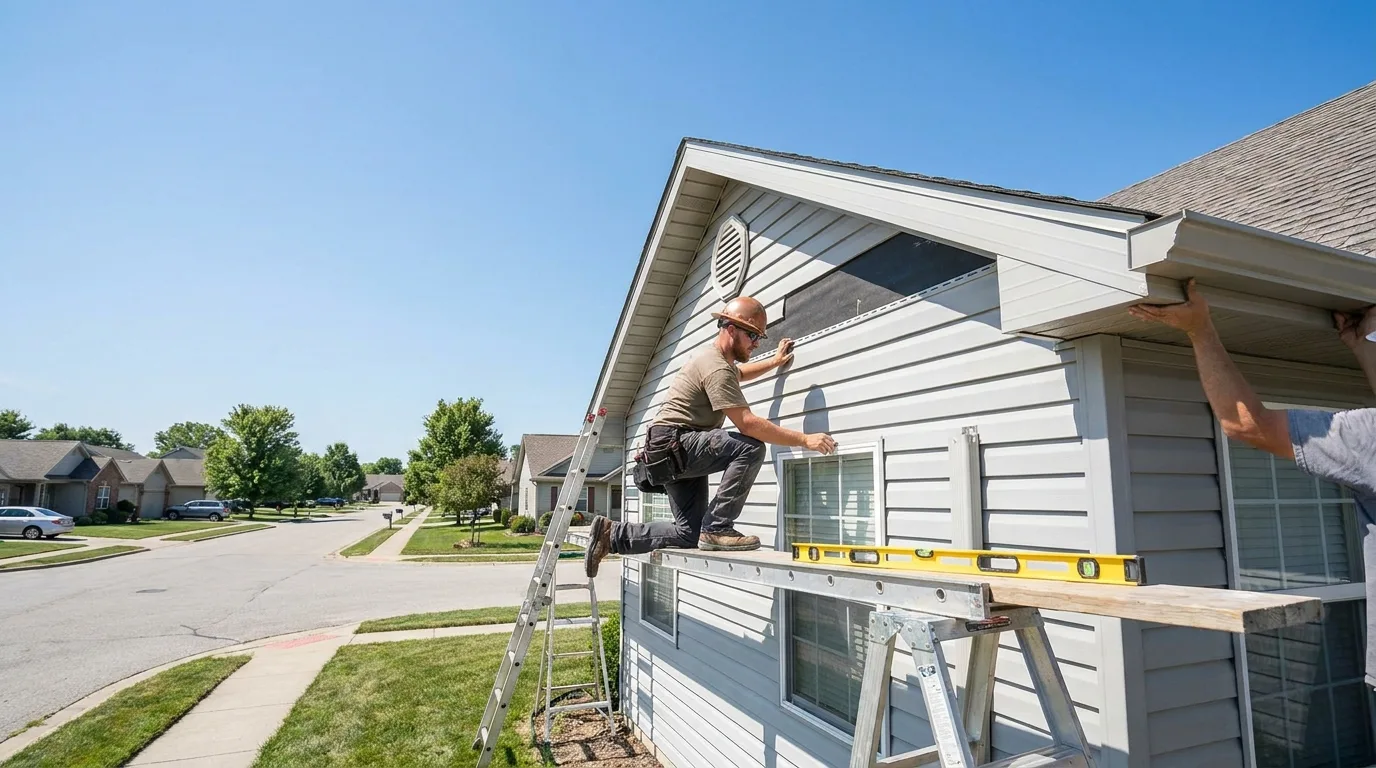
Siding and Gutters in Sioux Falls
Siding and gutters in Sioux Falls and surrounding areas. Insurance billing accepted. Call (605) 965-2727.
A single cracked panel or a sagging gutter section might look cosmetic, but in South Dakota’s climate those small failures compound fast. Water that can’t drain away from the fascia finds its way behind the siding, soaks the sheathing, and by the time you notice a soft spot on the interior wall the damage has been spreading for months. Siding and gutter work done right stops that cycle before it starts, and when storm damage is involved, it creates the documentation trail your insurance carrier needs to process the claim.
What siding and gutters actually involves
Siding replacement is a full exterior envelope project, not just a cosmetic swap. Installers remove the damaged or deteriorated panels, inspect the housewrap and sheathing underneath for moisture intrusion or rot, make any necessary substrate repairs, and then install new material, most commonly vinyl, fiber cement (James Hardie and similar), or engineered wood, with properly lapped seams, flashed penetrations, and sealed trim. On older Sioux Falls homes with original wood siding, there’s often a layer of compromised felt paper or no housewrap at all, which has to be addressed before the new product goes on.
Gutter work ranges from cleaning and resealing existing sections to full gutter replacement with new downspout routing. In this region, 5-inch K-style aluminum gutters are standard on most residential builds, but many homes benefit from an upgrade to 6-inch gutters or the addition of leaf-guard systems to handle the volume from heavy spring and fall rain events. Downspout extensions and underground drainage connections are often part of the scope when grading or foundation concerns are present.
A complete siding and gutter project on a typical two-story Sioux Falls home generally runs two to five days for installation, not counting any substrate repair work that surfaces during tear-off.
Our process
-
Exterior inspection and damage documentation. Before any material is ordered, the crew walks the full perimeter, photographs all damaged areas, probes suspect sections for soft sheathing, and checks the fascia and soffits for rot. If the loss is storm-related, this documentation goes directly to your adjuster.
-
Substrate assessment and repair. Tear-off reveals what’s actually behind the siding. Rotted OSB or plank sheathing, failed housewrap, and compromised flashing at windows and doors are addressed at this stage, not patched over. New moisture barrier is installed before any new cladding goes on.
-
Material selection and scope confirmation. Product choice affects both price and long-term performance. The crew walks through options, panel profile, color, warranty terms, and provides a written scope of work before installation begins. No surprises on material once the job starts.
-
Installation and flashing. Siding is installed per manufacturer specifications, with particular attention to starter strip alignment, corner trim, and all penetration flashings (hose bibs, electrical boxes, dryer vents). Gutters are hung with correct pitch toward downspouts, secured with hidden hanger systems rather than spike-and-ferrule, and sealed at all miters and end caps.
-
Final walkthrough and drainage test. The finished job gets a full perimeter walkthrough. Gutters are water-tested on site to confirm slope and confirm there are no leaks at seams or downspout connections before the crew leaves.
What separates a good siding and gutter job from a bad one
The most common failure point in siding work is skipping or rushing the substrate inspection. Contractors under price pressure will install new siding directly over rotted or wet sheathing, which guarantees the same moisture problem returns within a few years. A thorough tear-off and probe of the wall assembly, especially around windows, at the base of walls near grade, and anywhere previous caulking has failed, is what separates a lasting repair from one that looks good in photos and fails in three winters.
On the gutter side, spike-and-ferrule hangers are still common on older homes and they pull away from the fascia over time, especially under the weight of ice and snow. Replacing them with hidden hanger systems screwed directly into the rafter tails makes a measurable difference in how long the gutters stay properly pitched. Downspout placement and extension length also matter more than most homeowners realize, water deposited too close to the foundation is one of the leading contributors to basement moisture problems in Sioux Falls’s clay-heavy soils.
Insurance adjusters reviewing storm-damage claims look for consistent documentation: photos taken before tear-off, a clear scope distinguishing storm-caused damage from pre-existing wear, and material specs that match what was removed. Gaps in that documentation are the most common reason supplement requests get delayed.
What does siding and gutters cost?
Typical costs vary significantly based on home size, material choice, and the extent of any substrate damage found during tear-off. Most homeowners pay somewhere in the ranges below, based on industry averages, these are not quotes from Crew Restoration & Construction, and every loss is different. Crew Restoration & Construction provides a written scope of work before any project begins so there are no surprises mid-job. Homeowners insurance typically covers siding and gutter replacement when damage is caused by a covered peril such as hail, wind, or falling debris, wear and pre-existing deterioration are generally excluded.
| Scenario | Typical industry range |
|---|---|
| Gutter cleaning and resealing (single-story) | $150 – $400 |
| Full gutter replacement, average home | $1,200 – $3,500 |
| Partial siding repair (storm damage, one elevation) | $1,800 – $5,000 |
| Full siding replacement, vinyl, average home | $8,000 – $18,000 |
| Full siding replacement, fiber cement, average home | $14,000 – $28,000 |
| Siding + substrate repair + full gutter replacement | $16,000 – $35,000+ |
Seasonal and regional considerations
Sioux Falls sits in a hail corridor, late spring through early fall brings repeated storm events that can damage siding and gutters that looked fine the season before. Fiber cement and thicker vinyl profiles (0.046” and above) hold up noticeably better to hail impact than standard builder-grade vinyl, which is worth considering when replacing after a storm rather than matching original material.
Winter creates its own set of issues. Ice dams forming at the eave line put enormous lateral stress on gutters, and freeze-thaw cycling works at any unsealed seam or penetration in the siding. Scheduling siding work before the first hard freeze, ideally wrapping up by late October, gives sealants and caulking time to cure properly before temperatures drop.
Service area
Crew Restoration & Construction serves Sioux Falls and the surrounding region, including Brandon, Tea, Harrisburg, Dell Rapids, Baltic, and Renner. The city-specific pages for each community link back here for full service details.
If you’re looking at damaged siding or sagging gutters and want a straight answer on what it will take to fix it right, call (605) 965-2727 to schedule an exterior inspection and get a written scope before any work begins.
Frequently Asked Questions
Does homeowners insurance cover siding and gutter replacement?
How can I tell if my siding damage is just cosmetic or if the sheathing underneath is compromised?
What's the difference between 5-inch and 6-inch gutters, and which does my house need?
How long does a full siding replacement typically take from tear-off to finished installation?
What causes gutters to pull away from the fascia, and is it worth repairing or should I replace them?
Looking for the best siding and gutters company in Sioux Falls?
Crew Restoration & Construction provides licensed and insured siding and gutters in Sioux Falls, SD and the surrounding area. Customers rate us 4.9 out of 5 stars across 554 Google reviews. We answer calls 24/7 — call (605) 965-2727 for immediate help.
Request a Free Siding and Gutters Estimate
Tell us what happened and we'll get back to you fast — usually within one business hour.
Need Siding and Gutters now?
We respond 24/7 across Sioux Falls and surrounding SD cities.
Related Coverage
- Our Restoration Services
- Contact Crew Restoration & Construction
- Siding and Gutters in Adrian
- Siding and Gutters in Akron
- Siding and Gutters in Alton
- Siding and Gutters in Baltic
- Siding and Gutters in Beresford
- Siding and Gutters in Brandon
- Siding and Gutters in Brookings
- Siding and Gutters in Canton
- Siding and Gutters in Crooks
- Siding and Gutters in Dakota Dunes
- Siding and Gutters in Dell Rapids
- Siding and Gutters in Edgerton