
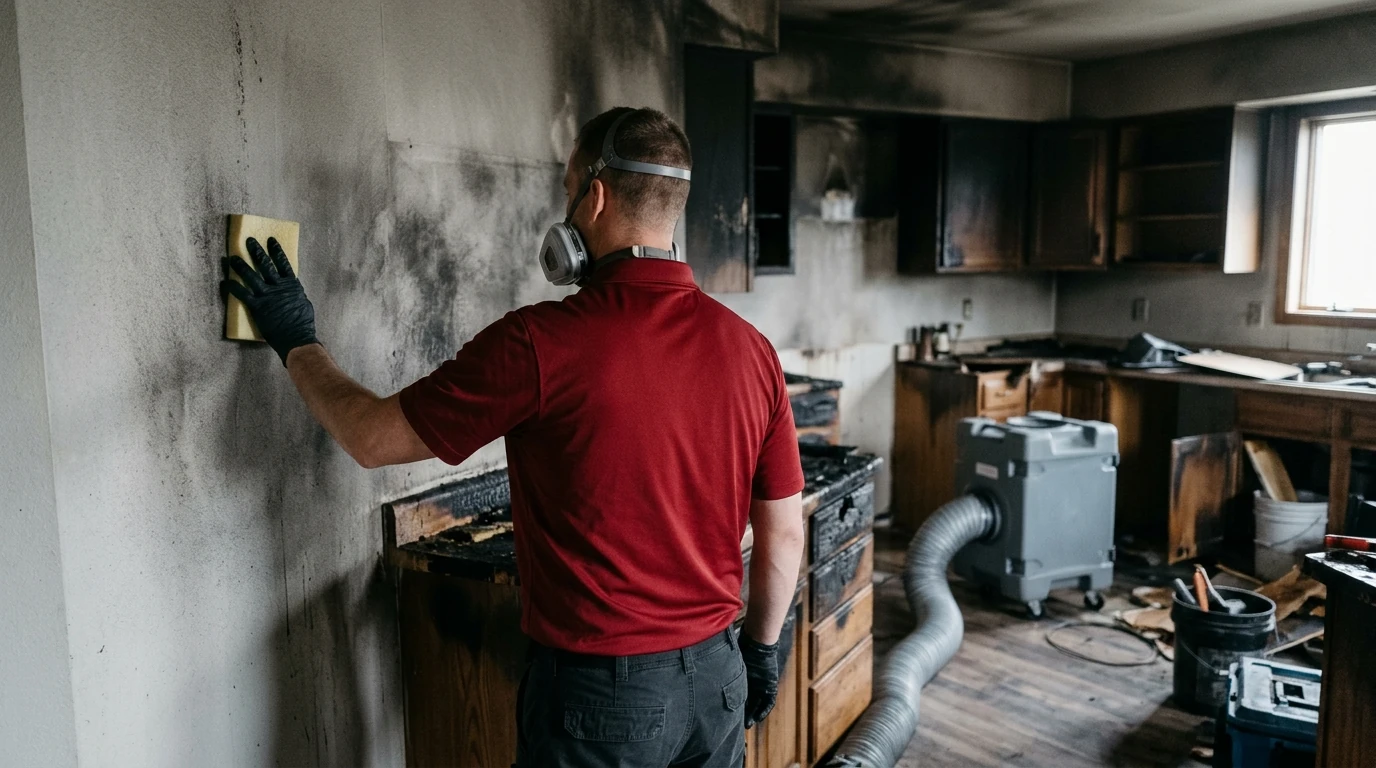
TL;DR: Smoke damage restoration in Sioux Falls, SD typically costs $500 to $1,800 for a single contained room and climbs to $8,000-$25,000 or more after a whole-house structure fire. Price depends on how far the soot traveled, whether odor removal needs thermal fogging or hydroxyl treatment, and how much HVAC ductwork and furniture needs cleaning. Homeowners insurance usually covers smoke damage from a sudden fire, but not gradual smoke buildup from years of cooking or candle use.
If a grease fire on the stove filled your McKennan Park kitchen with black smoke before you got it out with an extinguisher, you’re probably staring at soot-streaked cabinets and a lingering burnt smell, wondering if this is a $400 wipe-down or a five-figure claim. The honest answer sits somewhere in between for most calls, and it depends almost entirely on how far the smoke traveled and what it touched on the way.
How much does smoke damage restoration cost in Sioux Falls, SD?
Most Sioux Falls homeowners pay between $500 and $25,000 for smoke damage restoration, with the number driven almost entirely by how many rooms were affected and how deep the soot settled into porous materials.
| Scope | Typical Cost Range |
|---|---|
| Light smoke, single room (contained kitchen fire) | $500 - $1,800 |
| Moderate smoke, multiple rooms or upstairs/downstairs spread | $2,500 - $7,000 |
| Heavy smoke, whole-house (structure fire with fire department involvement) | $8,000 - $25,000+ |
| Odor removal treatment (thermal fogging, ozone, or hydroxyl) | $300 - $900 |
| HVAC and duct cleaning after smoke infiltration | $450 - $950 |
| Contents cleaning and pack-out (whole-house) | $1,500 - $6,000+ |
These are typical industry ranges for the Sioux Falls market, not quotes. A written scope after an on-site inspection is the only way to get an accurate number for a specific property, since soot behaves differently depending on what burned (plastic and synthetic materials produce stickier, harder-to-clean residue than wood) and how long it sat before cleanup started.
What drives the price up or down?
The single biggest cost factor is how far the smoke traveled before the fire was out, because soot particles ride warm air into rooms that never saw flame.
A fire contained to the stovetop with quick suppression might leave soot only on nearby cabinets and the ceiling above the range. The same fire left to smolder for ten minutes before extinguishing can push smoke through the HVAC system into every room in the house, turning a one-room job into a whole-house one.
Other factors that move the number:
- Type of material burned. Protein fires (grease, meat) leave a greasy, pungent residue that’s harder to remove than paper or wood smoke and often needs a stronger degreasing agent before odor treatment can work.
- Porous vs. non-porous surfaces. Soot wipes off tile and glass relatively easily. It embeds into drywall, carpet, upholstery, and unsealed wood, which sometimes means replacing rather than cleaning.
- How long before cleanup started. Soot becomes more acidic and corrosive the longer it sits, etching into metal fixtures and yellowing paint within days.
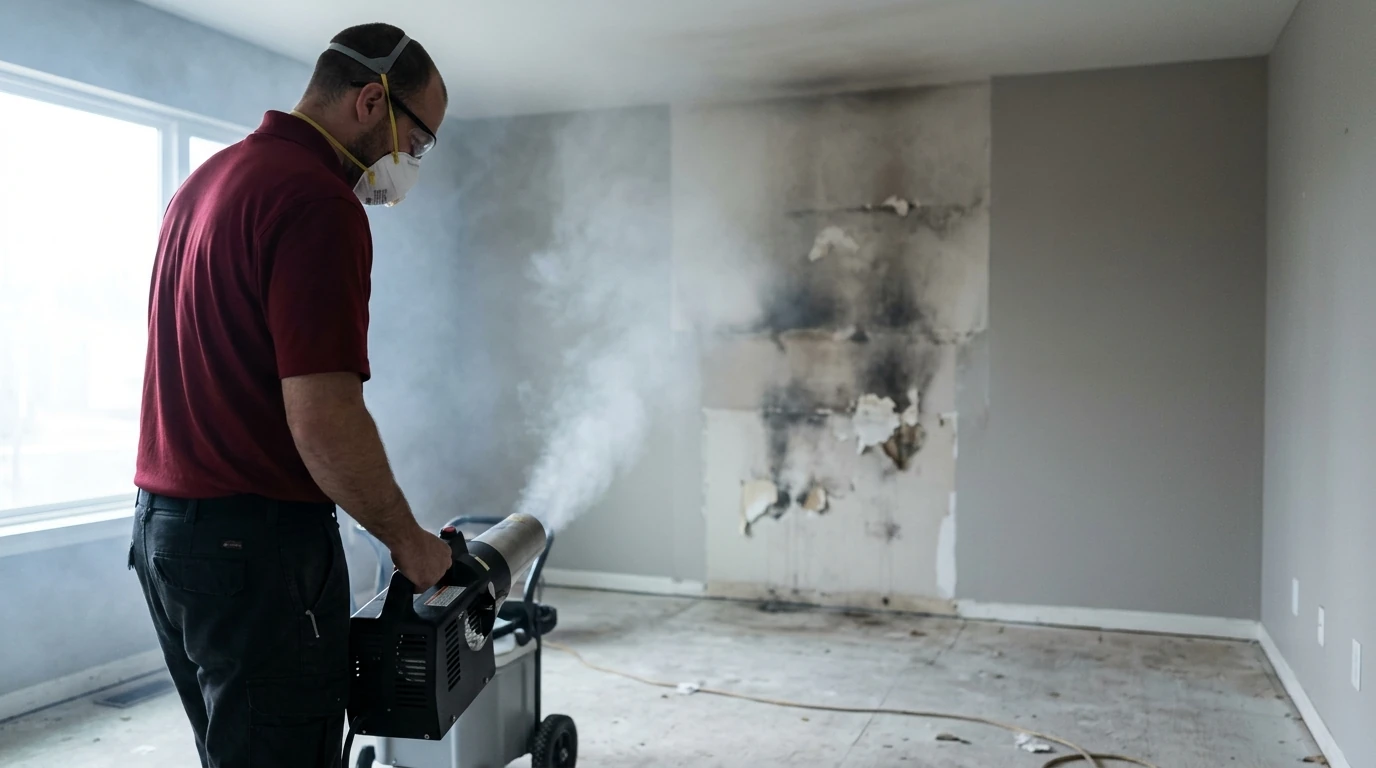
- Odor removal method needed. Light odor often clears with air scrubbing and sealant. Heavy, deep-set odor usually needs thermal fogging or an ozone or hydroxyl treatment cycle, which adds cost but is far more reliable than air fresheners or ozone shock alone.
- Contents affected. Clothing, soft furniture, and electronics often need to be removed to a dedicated facility for ultrasonic or specialty cleaning rather than treated on-site.
The IICRC’s S700 standard for fire and smoke damage restoration outlines the inspection and cleaning protocols professional crews follow, which is part of why a certified assessment catches hidden soot (behind outlet covers, inside return-air vents) that a visual walkthrough misses.
What does homeowners insurance typically cover for smoke damage?
Most homeowners policies cover smoke damage from a sudden, accidental fire, including cleaning, odor removal, and repair of smoke-damaged materials, as part of standard dwelling and personal property coverage.
What’s usually NOT covered: smoke damage that built up gradually over years, such as yellowed walls from long-term candle burning or cooking residue with no single triggering event. Insurers treat that as maintenance, not a covered loss.
Documentation matters for approval. Photograph the damage before any cleaning starts, keep the fire department incident report if one was filed, and get a written scope of work before repairs begin rather than after. The Insurance Information Institute’s guide to what standard homeowners policies cover is a useful reference before you call your adjuster. Every policy differs, so confirming your specific coverage and deductible with your agent is the only way to know what you’ll pay out of pocket.
What does the smoke damage restoration process actually involve?
A typical smoke damage job moves through five phases, usually in this order:
- Inspection and scope. A technician identifies how far the smoke traveled, tests surfaces for soot type, and writes a scope of work tied to what insurance will reimburse.
- Content protection and pack-out. Furniture, clothing, and valuables in the affected area get removed or protected before cleaning chemicals and equipment move in.
- Soot and residue removal. Walls, ceilings, and hard surfaces get cleaned with dry sponges, HEPA vacuums, and degreasing agents matched to the soot type.
- Odor treatment. Once surfaces are clean, thermal fogging, ozone, or hydroxyl treatment neutralizes odor molecules trapped in carpet fibers, drywall, and HVAC ductwork.
- HVAC cleaning and final repairs. Ducts get cleaned or sealed to stop recirculating smoke odor, and any materials that couldn’t be cleaned (charred drywall, melted trim) get replaced during reconstruction. A full breakdown of what’s included at each phase is on the smoke damage restoration services page, and our guide to how professionals remove smoke odor covers the fogging-versus-ozone-versus-hydroxyl decision in more depth.
When the fire also damaged framing or flooring, reconstruction work typically starts once drying and odor treatment are confirmed complete, not before, so new materials aren’t installed over a surface that will off-gas smell for months.
If you’re working through a claim and comparing scopes, a second inspection rarely changes the diagnosis but can clarify what’s reasonable to expect to pay. For a fire in the Sioux Falls metro, from Whittier to the Prairie Green area, Crew Restoration & Construction can walk a property, document the soot pattern for the adjuster, and handle contents cleaning alongside the structural cleanup so the claim moves as one coordinated scope instead of three separate vendors.
About Crew Restoration & Construction
Crew Restoration & Construction is an IICRC-certified company (license 3814) based in Sioux Falls, SD, serving the metro since 2015. This guide was written with the company’s restoration team, which handles fire damage restoration, smoke damage restoration, and contents restoration across the Sioux Falls region.
Need help now? Call Crew Restoration & Construction at (605) 965-2727.