
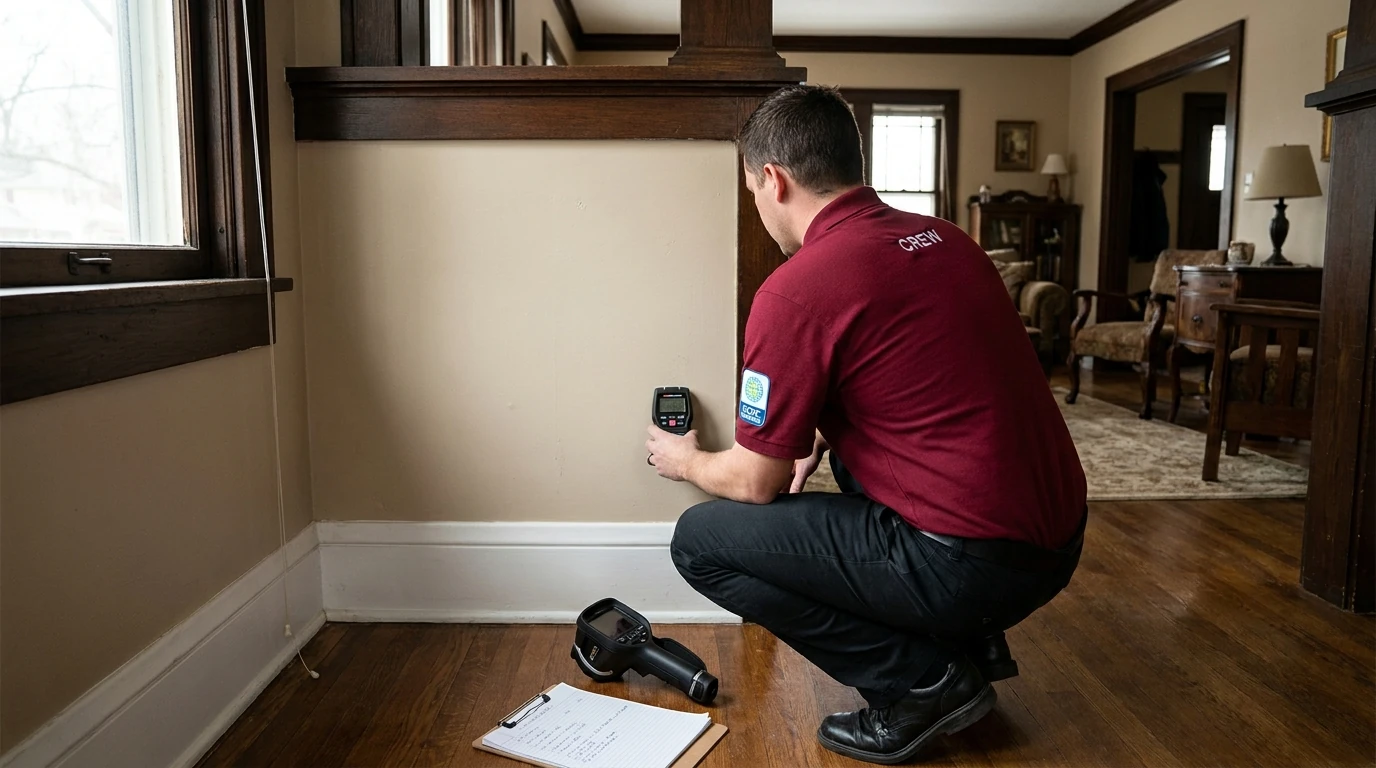
TL;DR: In Sioux Falls, SD, water leak detection typically costs $150 to $650 for a standard inspection using moisture meters and acoustic listening equipment, and $500 to $1,200 for a slab leak or underground line that needs thermal imaging and tracer gas. The final number depends on how many areas get tested, whether the leak is behind a wall or under concrete, and whether detection is bundled with drying work afterward.
If your water bill jumped by $60 or more this month and you can’t find a single wet spot in the house, you’re likely dealing with a hidden leak behind drywall, under a slab, or in a buried yard line. A flat-rate plumber visit isn’t always the right tool for finding that kind of leak. It usually takes acoustic equipment, a thermal camera, and someone who knows how to read both.
How much does water leak detection cost in Sioux Falls, SD?
Most Sioux Falls homeowners pay between $150 and $650 for a standard leak inspection, and $500 to $1,200 when the leak is under a slab or buried line. The price scales with how hard the leak is to isolate, not with the size of the house.
| Scenario | Typical cost |
|---|---|
| Basic visual + moisture meter check, single area | $150 - $350 |
| Full-home acoustic and thermal leak survey | $350 - $650 |
| Behind-wall or under-floor leak (electronic listening device) | $400 - $900 |
| Slab leak detection (concrete foundation) | $500 - $1,200 |
| Underground or yard line leak detection | $450 - $1,000 |
| Detection bundled with moisture mapping and drying setup | $600 - $1,500 |
A few things move the number inside those ranges: how many rooms or zones need testing, whether the home has a crawlspace or a slab foundation (slabs take longer and need specialty tracer equipment), how old the plumbing is, and whether the technician also has to pull back flooring or cut small access points to confirm a reading.
What signs point to a hidden water leak?
A water bill that’s noticeably higher than the same month last year, with no new appliance or extra household use to explain it, is the most reliable early sign of a hidden leak. Other signs show up before you ever see standing water.
Watch for: a warm spot on an otherwise cool slab floor (a sign of a hot water line leak), a faint hissing sound near a wall when fixtures are off, a musty smell with no visible source, baseboards that feel soft or paint that’s bubbling, or your water meter dial still spinning when every fixture in the house is off. That last test is the single fastest DIY check: shut everything off, note the meter reading, wait 30 minutes without using water, then check it again.
A high water bill with no visible leak is common enough that it has its own pattern: it usually means the water is going somewhere you can’t see it yet, most often a slab line, an irrigation line, or inside a wall cavity. Our earlier guide on identifying a water leak walks through more of the early-stage signs Sioux Falls homeowners tend to miss.
What equipment actually finds a leak behind walls or under a slab?
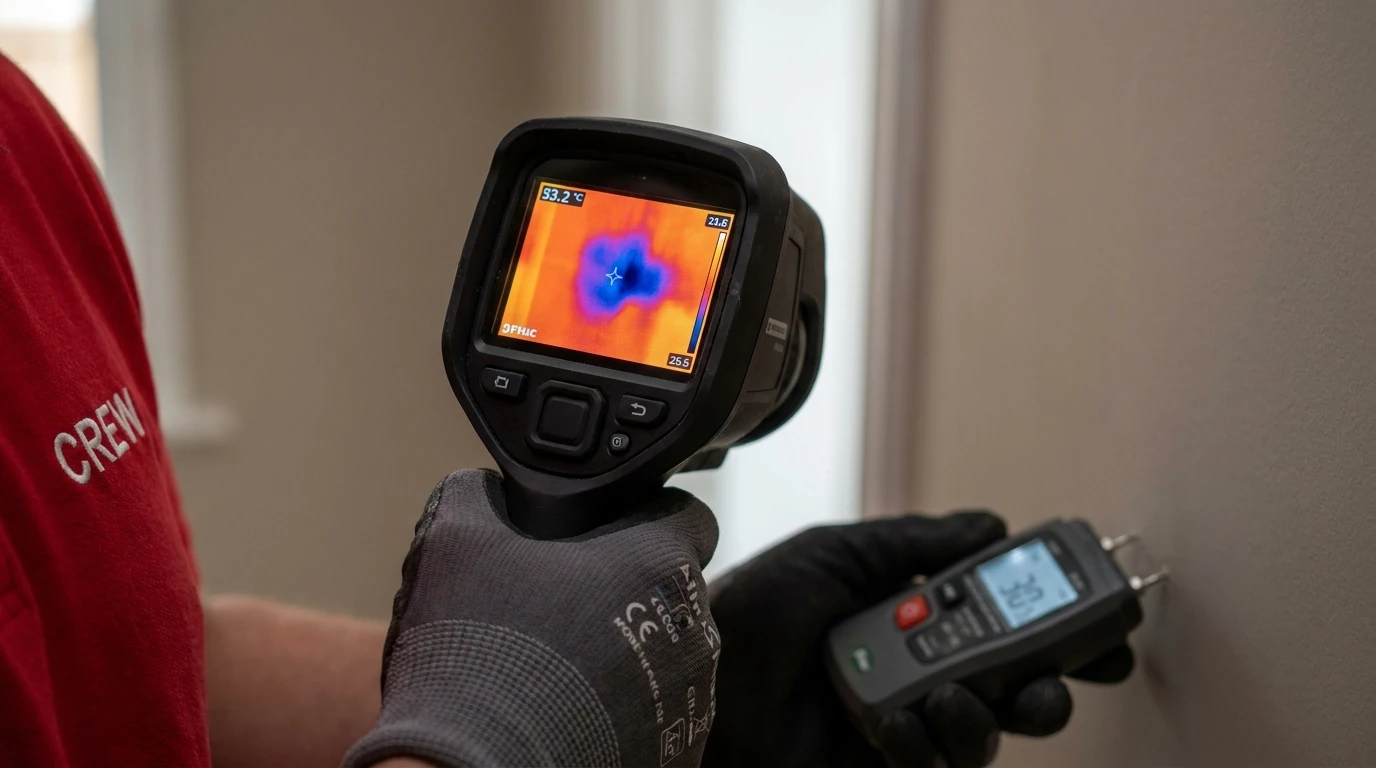
Acoustic listening equipment and infrared thermal imaging are the two tools that find leaks without tearing open a wall first. Acoustic devices amplify the sound of water moving or dripping inside a pipe, letting a technician narrow the leak to a small section before any cutting happens.
Thermal imaging cameras read surface temperature differences. A pressurized leak under a slab or behind drywall cools or warms the surrounding material just enough to show up as a distinct patch on the camera, well before it’s visible to the eye. Moisture meters then confirm the reading by measuring actual moisture content in the material itself, not just temperature.
For slab leak detection specifically, technicians often add tracer gas (a nontoxic hydrogen-nitrogen mix pushed through the empty line) and listen for where it escapes through the concrete. This combination is why slab leak detection costs more than a surface inspection: it takes more equipment and more time to isolate a leak that’s under several inches of concrete.
Under IICRC’s S500 water damage restoration standard, water from a clean supply line starts as Category 1, but it doesn’t stay clean once it’s been sitting inside a wall cavity or under flooring for any length of time. That’s one reason detection matters: the longer a leak runs undetected, the more it can affect material that otherwise would have been a simple repair.
Will homeowners insurance pay for leak detection?
Most standard homeowners policies cover sudden, accidental water damage, but coverage for the detection work itself varies by insurer and by policy language. Some policies include a leak detection or “tear-out” endorsement that covers the cost of finding the leak if it caused covered damage; others only cover the repair once the source is identified.
What consistently is NOT covered: damage from a slow leak that was ongoing for weeks or months due to wear and tear, or a leak that went undetected because of poor maintenance. That’s part of why finding a leak early, before it turns into a bigger claim, protects you either way. The Insurance Information Institute has more detail on what standard policies typically cover and exclude. Always check your specific policy language, since coverage for detection costs is one of the more inconsistent clauses between insurers.
What happens after the leak is found?
Once a leak is isolated, the next steps are usually: confirm the exact location and depth, document it with photos and moisture readings for your records (and your insurer, if applicable), shut off or reroute water to that line, and then assess what the leak has already affected.
- Confirm and mark the leak location so repair access is as small as possible.
- Check surrounding materials with a moisture meter, including inside walls, under flooring, and in the attic above if it’s a roof-adjacent leak.
- Shut off water to the affected line to stop further intrusion.
- Set up drying equipment if moisture has already spread into drywall, subfloor, or framing.
- Schedule the repair and any affected material replacement, including drywall, flooring, or ceiling sections.
If the leak has been running long enough to soak drywall or a ceiling, that’s a separate job from detection, usually water damage restoration or ceiling water damage repair depending on where it surfaced. And if the area stayed damp for more than a day or two, it’s worth a mold inspection before you close the walls back up, since mold can start growing on wet material within 24 to 48 hours according to the EPA.
In the Sioux Falls area, Crew Restoration & Construction handles both the detection call and the drying or repair work that follows, so the same crew that finds the leak can also document it for your insurer and get the affected material dried before mold becomes a second problem. If you’re not sure whether what you’re dealing with is a plumbing fix or a full detection job, Water Leak Detection is the starting point either way.
A leak that’s caught early is almost always cheaper to fix than one that’s found after it’s already soaked through flooring or drywall. Request a leak detection assessment before the water bill creeps up again, or call Crew at (605) 965-2727 if you’re already seeing signs.
About Crew Restoration & Construction
Crew is an IICRC-certified company (license #3814) serving Sioux Falls, SD and the surrounding region since 2015. Their crews handle water leak detection, water damage restoration, mold inspection and remediation, and the reconstruction work that follows, holding a 4.9 average from 643 Google reviews. Author Kyle Eberts covers restoration and home-repair topics for the Crew team.