
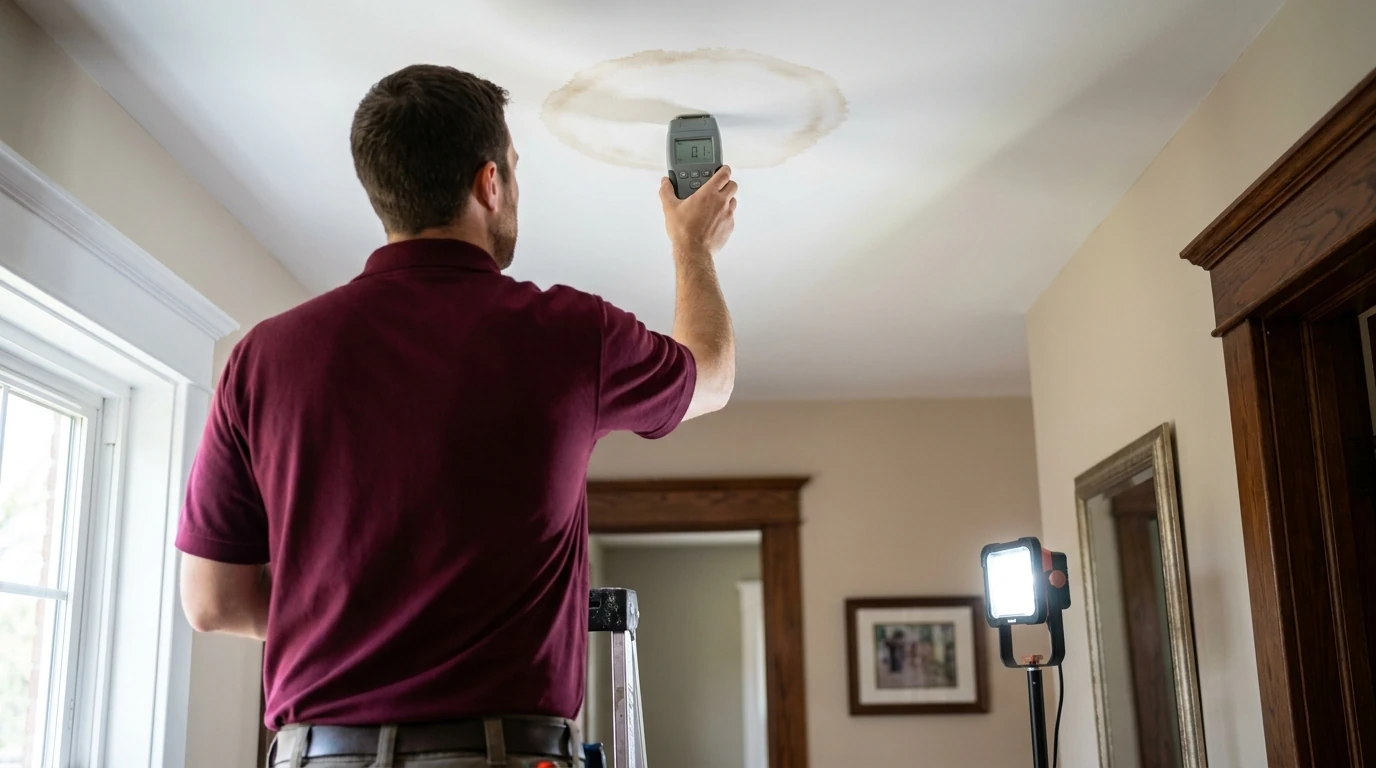
TL;DR: Ceiling water damage repair in Sioux Falls typically runs $150 to $8,000 or more, depending on whether the ceiling is just stained, wet but structurally intact, sagging, or collapsed. A paint-only fix on a small, dry stain can cost under $400. A collapsed section needing framing, insulation, and texture work can run $3,000 to $8,000. Most single-room jobs land between $500 and $3,000.
Maybe you noticed a brown ring spreading across the bathroom ceiling after the shower upstairs ran too long. Maybe you came home after last week’s wind event to a bulging, water-heavy patch of drywall above the hallway. Either way, before you decide whether to call your insurance company, a handyman, or a restoration contractor, you need a real number. The honest answer depends entirely on how far the water traveled past the surface. In older Sioux Falls neighborhoods like McKennan Park and the Cathedral Historic District, where many ceilings are still plaster over lath instead of drywall, that distinction matters even more.
How much does ceiling water damage repair cost in Sioux Falls, SD?
Most ceiling water damage repairs in the Sioux Falls area fall into four price bands based on how severe the damage is. The table below reflects typical regional ranges, not a quote: every ceiling is different, and a written scope after an in-person inspection is the only way to get an accurate number.
| Damage scenario | Typical cost range |
|---|---|
| Water stain only, ceiling dry and intact (clean, prime, repaint) | $150 to $400 |
| Small drywall patch under 4 sq ft, minor drying needed | $400 to $900 |
| Wet but intact drywall requiring professional drying (no cut-out) | $500 to $1,200 |
| Sagging drywall, partial ceiling section cut out and replaced | $1,200 to $3,000 |
| Plaster ceiling section repair (older homes, lath and plaster) | $1,500 to $4,000 |
| Collapsed or saturated ceiling with framing, insulation, texture, and paint | $3,000 to $8,000+ |
Add roughly $500 to $1,500 if the leak also damaged a light fixture, ceiling fan, or ran down into wall cavities, since that adds electrical shutoff, additional drying equipment, and more drywall.
What determines whether a ceiling needs drying, patching, or full replacement?
The deciding factor is how saturated the material is and how long it stayed wet, not just how the stain looks from the floor. A ceiling that was caught within hours of the leak often dries in place; one that sat wet for days usually has to come down.
A few things shift the number:
- How long it was wet. Drywall that stays saturated more than 48 hours loses structural integrity and starts to sag or crumble, and mold can begin growing in that same window, according to the EPA. Past that point, drying in place usually isn’t an option.
- Material type. Drywall is cheaper to replace but fails faster when wet. Plaster, common in Sioux Falls’ older housing stock, can sometimes be dried and saved, but repair work (matching texture, keying in new lath) runs higher per square foot.
- Water category. Water from a clean supply line leak is one thing; water from a sewer backup or storm-driven rain intrusion is contaminated and requires more removal, antimicrobial treatment, and disposal, per the ANSI/IICRC S500 standard.
- Insulation above the ceiling. If attic insulation got saturated, it almost always needs to be removed and replaced, adding cost that’s easy to miss in a quick estimate.
- Source of the leak. A one-time appliance failure is a simpler fix than a slow roof leak that’s been wicking into the same spot for months, which often means replacing more framing than expected.
If you’re unsure which category your damage falls into, our guide on identifying a water leak covers the early signs homeowners usually miss before a ceiling stain shows up.
Does homeowners insurance cover ceiling water damage?
Most standard homeowners policies cover ceiling damage when the water came from a sudden, accidental source, like a burst supply line or a water heater that suddenly fails. Gradual leaks, long-term seepage, and damage from lack of maintenance are typically excluded, and flood water is never covered without a separate flood policy, per the Insurance Information Institute.
That line matters a lot for ceiling claims specifically. A pipe that bursts overnight and soaks the ceiling below is usually a covered loss. A slow roof flashing leak that’s been dripping for months, staining the same spot gradually, is often denied because insurers treat that as a maintenance issue, not a sudden event. If the leak came through the roof during a storm, your policy may cover both the roof repair (see our roofing page) and the interior ceiling damage, but documentation of the storm date matters for the claim. Photograph the stain, the source if you can see it, and any standing water before cleanup starts, and keep receipts for any temporary repairs. Our post on whether homeowners insurance covers water damage walks through more of the fine print.
What happens during ceiling water damage repair?
The process depends on the severity, but most jobs follow the same sequence:
- Source shutoff and inspection. The leak gets stopped first. A technician checks moisture levels in the ceiling, walls, and attic with a moisture meter to map how far the water traveled.
- Water extraction and drying setup. If the ceiling is salvageable, air movers and a dehumidifier run for several days to bring moisture content back to normal before any patching begins.
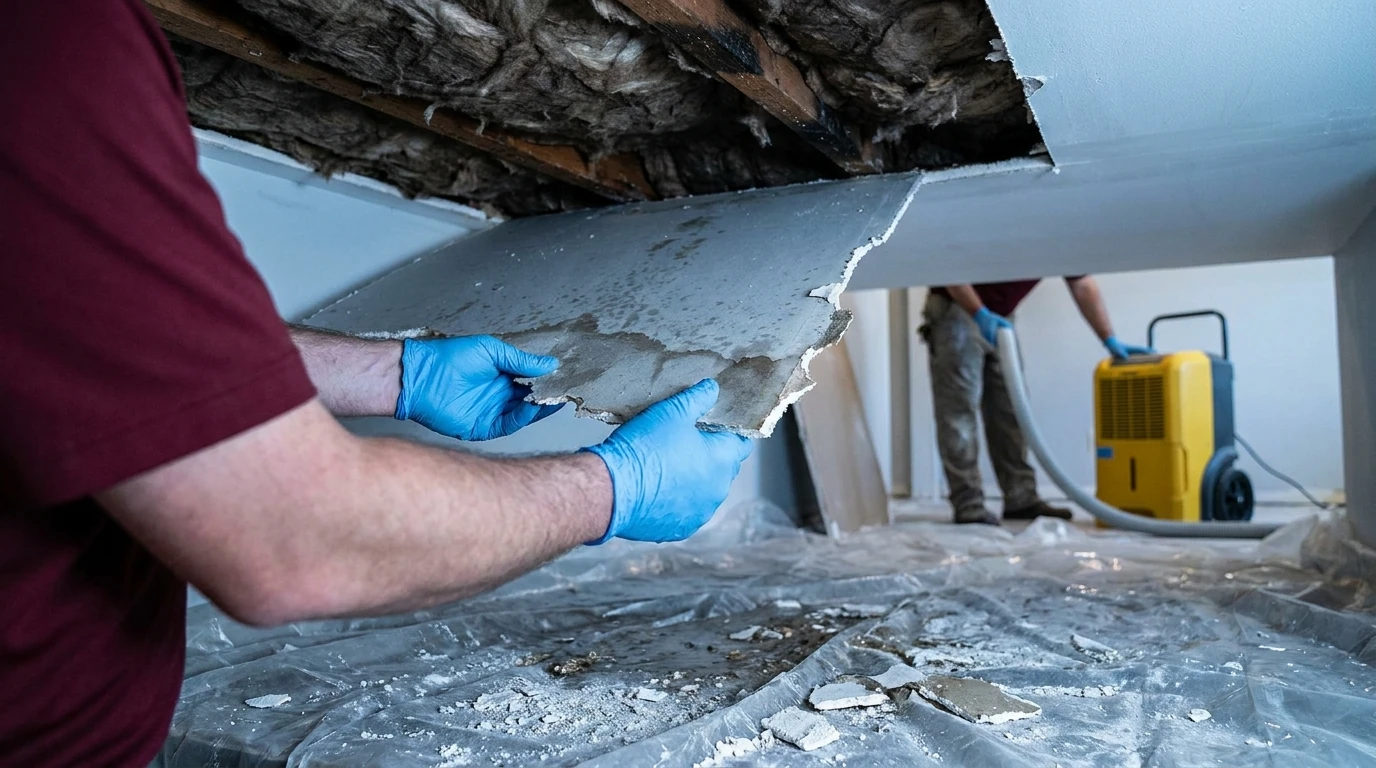
- Demo of unsalvageable material. Saturated drywall, wet insulation, and any damaged plaster get removed down to dry, sound material.
- Framing and insulation repair. Any swollen or rotted framing gets replaced, and new insulation goes in before the ceiling closes back up.
- Drywall, texture, and paint. New drywall is hung, taped, textured to match, primed, and painted.
A job that needed both the structural side and the finish work is a good illustration of how that handoff works; see the structural repair case study for Guizado in Harrisburg, SD for an example of a project that moved from drying straight into rebuild. Handling mitigation and reconstruction under one roof, which is how Crew Restoration & Construction structures larger ceiling jobs, avoids the handoff delay that happens when a drying company and a separate contractor have to coordinate schedules.
If your home has a textured popcorn ceiling, water damage often means the texture has to be scraped before repair anyway; our guide on replacing popcorn ceilings covers what that process looks like in older Sioux Falls homes.
Before any contractor starts cutting into drywall, ask for a written scope that separates drying time, materials, and finish work; that’s what makes the final invoice match the estimate instead of growing mid-job. Call Crew Restoration & Construction at (605) 965-2727 to get a moisture assessment and a written scope before deciding between a patch and a full replacement.